1st Jun 2026
When ground conditions are poor, unstable, or prone to wear, projects can quickly become expensive to maintain. From construction compounds and access roads to car parks, equestrian surfaces, and grassed overflow parking areas, the right ground reinforcement solution helps create a stronger, longer-lasting surface without the need for extensive groundwork.
Ground reinforcement grids are designed to improve load distribution, reduce surface movement, and protect the ground beneath from rutting and erosion. But how exactly do they work, and why are they increasingly being specified across commercial, industrial, and public sector projects?
What Are Ground Reinforcement Grids?
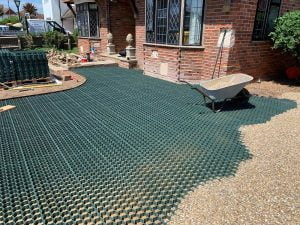
Ground reinforcement grids are interlocking systems manufactured from durable materials such as recycled plastic or high-strength polymers. They are installed over prepared ground to stabilise the surface and spread loads more evenly across the area.
The grids create a reinforced structure that supports vehicle and pedestrian traffic while helping maintain the integrity of the surface below. Depending on the application, they can be filled with gravel, soil, or grass to create either a permeable hardstanding surface or a reinforced grass finish.
They are commonly used for:
- Temporary and permanent access roads
- Construction site compounds
- Car parks and overflow parking areas
- Emergency access routes
- Equine and agricultural applications
- Pedestrian walkways and public spaces
- Ground protection for events and utilities projects
How Do Ground Reinforcement Grids Work?
Without reinforcement, repeated traffic can compact soil unevenly, leading to sinking, rutting, standing water, and surface failure. Ground reinforcement grids solve this by distributing the weight of vehicles and foot traffic across a wider area.
Instead of pressure being concentrated in one location, the load is spread through the grid structure and into the sub-base beneath it. This reduces stress on the ground and improves overall stability.
The cellular design also helps contain fill materials such as gravel, preventing migration and maintaining a more even surface over time.
Improved Load Distribution
One of the key functions of a reinforcement grid is load spreading. Whether used for HGV traffic, plant machinery, or regular vehicle use, the grid system helps prevent wheels from sinking into softer ground conditions.
This makes them particularly useful on sites with:
- Weak subgrades
- Saturated ground
- High traffic volumes
- Areas prone to rutting or erosion
Surface Stability
Ground reinforcement grids lock together to form a stable platform that resists movement under pressure. This helps minimise displacement of aggregate and reduces maintenance requirements compared to unreinforced surfaces.
For gravel systems, the grids also help prevent loose stone migration, improving both usability and appearance.
Drainage and Permeability
Many ground reinforcement systems are permeable, allowing water to drain naturally through the surface rather than pooling on top. This can help reduce surface water build-up and support SuDS-compliant designs in certain applications.
Permeable surfaces are increasingly important across commercial developments, public spaces, and environmentally conscious projects where effective water management is required.

Types of Ground Reinforcement Grid
Different projects require different reinforcement solutions. The most suitable system will depend on expected traffic, ground conditions, drainage requirements, and finish type.
Gravel Reinforcement Grids
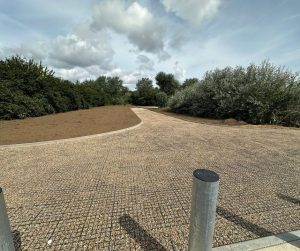
Gravel grids are designed to stabilise loose aggregate surfaces while maintaining permeability. They are commonly used for driveways, car parks, access routes, and public realm projects where a durable gravel finish is required.
The grid structure keeps gravel contained while improving traction and reducing rutting.
Grass Reinforcement Grids
Grass reinforcement grids allow grass to grow through the structure while protecting the root zone beneath from vehicle damage and compaction.
These systems are often specified for overflow parking, emergency access routes, and environmentally sensitive areas where a natural appearance is preferred.
Heavy-Duty Ground Protection Systems
For construction sites, infrastructure works, and industrial environments, heavy-duty ground reinforcement solutions provide temporary or permanent access over unstable ground.
These systems are designed to withstand higher axle loads and repeated trafficking while helping reduce damage to the underlying surface.

Benefits of Using Ground Reinforcement Grids
Ground reinforcement grids are widely used because they offer practical, long-term performance benefits across a range of applications.
Reduced Surface Damage
By reinforcing the ground and improving load distribution, grids help prevent rutting, potholes, and erosion caused by repeated use.
Lower Maintenance Requirements
Stable reinforced surfaces typically require less ongoing maintenance compared to unreinforced gravel or soft ground areas.
Faster Installation
Many systems are modular and easy to install, helping reduce installation time and site disruption.
Sustainable Surface Solutions
Permeable reinforcement systems can support sustainable drainage strategies while reducing the need for extensive excavation and imported materials.
At Gridforce, many solutions are manufactured from recycled materials and designed for long-term performance in demanding environments.
Improved Accessibility and Safety
Reinforced surfaces provide improved traction and more reliable access for vehicles and pedestrians, even during poor weather conditions.

Choosing the Right Ground Reinforcement Solution
Selecting the correct grid system depends on several project factors, including:
- Ground conditions
- Expected traffic loads
- Surface finish requirements
- Drainage considerations
- Temporary or permanent use
- Installation environment
A system suitable for pedestrian access may not be appropriate for HGV traffic, while environmentally sensitive areas may require a permeable grass reinforcement solution rather than a traditional hardstanding surface.
Working with an experienced supplier can help ensure the correct specification is chosen from the outset.
Ground Reinforcement Solutions from Gridforce
At Gridforce, we supply a range of high-performance ground reinforcement and ground protection systems designed for commercial, industrial, and public sector projects across the UK.
Our solutions are designed to improve ground stability, support long-term surface performance, and simplify installation across a wide range of applications.
Whether you need a permeable gravel grid for a car park, a reinforced grass solution for overflow parking, or a heavy-duty access system for construction traffic, our team can help specify the right product for your project.
Why Ground Reinforcement Matters
Ground reinforcement grids provide a practical and cost-effective way to stabilise surfaces, improve load distribution, and reduce long-term maintenance issues.
By reinforcing the ground beneath and protecting the surface above, they create more durable, accessible, and sustainable spaces for both temporary and permanent applications.
As projects continue to prioritise performance, drainage, and environmental considerations, ground reinforcement systems are becoming an increasingly important part of modern surface design.